Showing posts with label jon. Show all posts

Saturday, February 28, 2009

Mount Eerie – Lost Wisdom (J)

"10 songs recorded quickly and quietly during a surprise visit by Julie Doiron, keeper of the world’s greatest and saddest voice, and Fred Squire, hidden guitarist of the floating riff, in a small wooden room in Anacortes, Washington before they returned home to eastern Canada. Songs with the expression of the face of a baby in a burning world, in the swirling dust. They hang on a theme of impermanence and destroying forces. The river is revealed to be going right through the house, the river of inevitable chaos, sorrow and love." (Taken from Phil Elverum’s site http://pwelverumandsun.com/store)

Yes. Oh my god, yes. Sweet, merciful Jesus, yes. This album is…astoundingly good. But not just good…it’s great. It’s wonderful. It’s tear-jerkingly beautiful. I sat on the train today with this playing, watching the lights whir by as snow fell and it just…made sense.

Coming from my black metal roots, I couldn’t help but chuckle the first time I saw this album’s title (yes, this is a Burzum reference), but take heed, black metal fans, for this will not tickle your Varg/Grishnackh fancy.

“Lost Wisdom” fills every category needed on the good non-metal/rock album checklist:
Is it folk? Yes, yes it is. Check
Is it sad? Oh god, yes. Check
Are there male/female vocal harmonies? Yes. Yes. Yes. Check
Are the female vocals done by Julie Doiron? YES! Check
And last, but probably most important and relevant to this analysis: Was it recorded in a cabin in rural Washington? YES. YES. YES. YES. Check.

This time around, Phil Elverum meant business. After the spring release of the extraordinarily fuzzy, dense, almost metallic “Black Wooden Ceiling Opening” EP, he’s dropped the distortion, keyboards, and drums for a much more organic, desolate sound, and presents ten songs of love, loss, confusion, angst, existential confusion, and loneliness written alone in a cabin in the farthest reaches of Scandinavia. Songs written alone about being alone (how existential *chuckles*); I think this guy’s lyrical credibility went up a few notches in my book.

As mentioned earlier, Elverum enlisted the help of Julie Doiron, holder of the saddest voice on Earth, to harmonize with his quiet, distant yet familiar voice. When I first listened to this album (I feel so bad…I downloaded it off of a blog…), I heard the folky guitar enter with Phil’s voice and was pleased as is, but my eyes widened and my jaw dropped when Julie’s voice came in to complement his. In a romantic sense, their voices were almost meant to be together. Their voices waltz together, trade verses, build a choir behind a lead vocal track…they allow the other to grow their roots in the audience’s ears. This album is built around their voices; without these voices joining hands, the underlying theme of love lost and shared loneliness would be lost.
Elverum puts the acoustic guitar in the background, playing simple droning folky melodies as a backbone to the rest of the music. In this simplicity lies vast beauty and emotional complexity. Would the introduction of the first track be the same without the single note guitar beneath it? Would “Who?” lose its dark, nostalgic tone without the one-chord base? This simple style hearkens back to a more primitive time where music was a vessel to tell stories and express; not to prove technical prowess.

Fred Squire’s electric guitar work beneath Elverum’s adds a new layer of depth to these songs. A light fuzzy-yet-clean guitar flutters behind everything (“hidden” guitarist… “floating” riff…get it?), contributing to dynamics (note the louder strumming during the louder vocal parts in the title track, “Lost Wisdom”). The electric work of Squire gives “Lost Wisdom” the right amount of space to accentuate the loneliness felt by the narrator.

Speaking of loneliness and desolation, these dang lyrics are so bleak and excruciatingly sad, once you understand them, it’s pretty hard to “keep your cool” whilst giving this album a spin. My personal favorite lyrics are those to “O My Heart,” especially the second verse, starting with, “Oh, what’s this?” (following a very tasteful guitar solo):

“Oh what’s this? Is this my heart? Is it thumping? O my heart, there you are; I’ve stopped hunting. I thought you would be as big as a whale. My nets were knit, my heart moves on; I’ve had my ships sailed.”

These surreal lyrics that rely on a very nifty extended simile, surreal in the fact that his heart would be as big as a whale, though if his heart was that engorged he would probably die, but a cool image is seen in the mind’s eye, and the extended simile thus explaining that since the narrator thought that his heart was to be as big as a whale, he knit his net too large and his heart simply fell through the holes in the net, lost in the sea. Of course, his heart is lost in a sea of depression and turmoil; he wasn’t able to save love in time and thus it can’t be saved. Every song on this full-length demonstrates Elverum’s very strong grasp of prose; everything has an alternate, profound second meaning.

Mount Eerie’s “Lost Wisdom” is a wonderful work of deep, honest music. Every song is perfect the way it is, and is put in its logical place in the track progression. Needless to say this is probably my favorite release of this past year. It will accompany me on many coffee-drenched lonely nights and long drives. Let’s hope that Mount Eerie and Julie Doiron’s paths cross again.
Recommended for fans of: Low, Songs: Ohia, Bonnie ‘Prince’ Billy, Syndicate X, Thanksgiving, Charalambides, Nick Drake, Birch Book, Leonard Cohen, Ida, and the like.

Liam - Two Years and a Fragment (J)

Behold the bastard son of post-rock, black metal, and doom metal. Think of it as a more uniform Caina (first full-length), slowed down, and with HUGE production; not to mention desperate, fantastic vocals (both harsh and clean).

Starting off as a regular post-rock/post-metal band a la Mono/EITS, the folks in Líam released the "My Journey to the Sky" EP in 2007. Realizing that this rehashed post-rock sound that hundreds (if not thousands) of bands use is getting old, these guys take a massive black/doom approach to post-rock. This change in style gives us "Two Years and a Fragment, " released in late 2008.

Though this EP has only three songs, it will not disappoint. Long have I waited for a band other than Agalloch to meld these genres together in such a tasteful, beautiful, and crushing manner.

Recommended for fans of Wolves in the Throne Room (they’re playing with them soon), Agalloch, Shining, Esoteric, Caina, Panopticon, ISIS, jesu, Trist, Parabstruse, Lantlos, and so on.

Bon Iver – For Emma, Forever Ago (J)

So I’m back in an indie folk rut again, and the best way to summarize my current taste (other than Mount Eerie) is definitely Bon Iver. Yes, sad bearded-man folk music, but a lot more.
Justin Vernon recorded this album alone in a cabin in Northwestern Wisconsin (notice a trend here?) after an extreme breakup and a liver problem. While sitting alone in his cabin, Vernon watched a documentary concerning the Inuit. These people had a tradition of wishing each other a “bon hiver,” or “good winter” in French. Of course, “hiver” reminded Vernon too much of “liver,” which was causing him a good deal of pain, so he removed the H, making the name Bon Iver, which stuck.

Bon Iver is characterized by simple “strummy” folk guitar, occasionally masking a light glitch bass drum track, giving it a more upbeat sound, and, of course, Justin Vernon’s strong R&B-style falsetto vocals. No, not power metal falsettos; I’m talking big black guy-sounding falsettos. Of course, this one track of vocals doesn’t cut it; there needs to be over twenty tracks of Justin Vernon singing various harmonies, countermelodies, and bass tracks. Think of it as a choir of Justin Vernons; a big room of beardy-folk fellows that isn’t a coffee shop or record store (har dee har).

I had the opportunity to miss Bon Iver in concert (with The Tallest Man On Earth, a previously reviewed band), but from bootlegs and videos of live shows, Justin Vernon is accompanied by a live drummer and electric guitarist (does a lot of folk/post-rock/noise stuff O_o), but normally Vernon stands alone vocally, with occasional harmonies from everyone else. This more bleak sound is very pleasing, but a huge diversion from the more lush sound found on the album. Either way, it looks like Justin Vernon aims to please.

An interesting tidbit about Bon Iver live: Justin Vernon doesn’t want to be a one-guy-singing-with-a-guitar artist, so he has been known to hand out lyrics to the audience so they can sing along.

Overall, I like this album. A lot. It’s definitely up there with Mount Eerie’s “Lost Wisdom” for best album of the year, even though it was officially (self-) released last year.

Recommended for fans of: Low, Mount Eerie, Julie Doiron, Chuck Ragan, Neil Young, Steve von Till, and so on.

Sunday, August 31, 2008

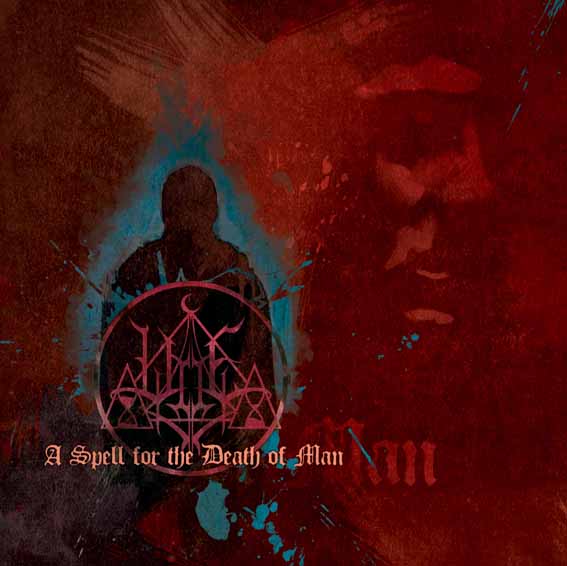
Woe – A Spell for the Death of Man (J)

The USBM scene has been rather slow this past year – hitting its climactic peak with Wolves in the Throne Room’s “Two Hunters” and stopping while the getting was good (I consider Velnias more doom than anything). A few months ago on MySpace (I know…) a band by the name of Woe added me. Judging by the logo and the title of the then-future release “A Spell for the Death of Man,” I simply passed the band off as either a Darkthrone/Immortal worshipping band, or some sort of hazy bedroom black metal project.

Then, a few weeks ago, Woe main man Xos sent out a notification offering a free promotional digital copy of “Spell” for reviewers, so I decided, what the hell, I might as well give this a try. I needed some more black metal anyway; I’ve been stuck in sort of an indie rock/post-rock/shoegaze rut for the past 2 months or so. Not that that’s a bad thing.

I’m definitely glad I gave Woe a chance – this is by far one of the more crushing and powerful black metal releases I’ve heard.

Hailing from Philadelphia, Pennsylvania, Woe delivers a highly misanthropic, folk-tinged sort of atmospheric raw black metal, ranging from dreamy stand alone wall-of-noise guitars to blasting full-on oppressive black metal.

In this recording, Xos concentrates more on guitar and drum work above everything, with vocals semi-buried into the mix, sounding like a howling wind (which is very nice, by the way). Emotion is key on this album, accentuating the depression and misanthropy of the author. Yes, I said the taboo word in this review: depression, but this isn’t a “depressive” black metal release per se. It is sad, but not the whole recorded-on-a-4-track-recorder-in-my-bedroom-with-wailing-and-whimpering depressive black metal that everyone immediately thinks of. Imagine Drudkh jamming with Wolves in the Throne Room and a crust punk band, and you’re halfway there.

Xos’s drumming on “Spell” is highly technical; full of blast beats, drum rolls, complex beat changes, and the like. The percussion definitely adds that extra “oomph” when it comes to intensity. Perhaps my favorite moment on the CD is a short burst of almost Envy-like post-hardcore/screamo in “Longing is all that Will Remain.”

Definitely a wonderful start for Woe, and I can’t wait to see what Xos cooks up for future releases.

Recommended for fans of: Panopticon, Drudkh, Wolves in the Throne Room, Darkthrone, early Agalloch, Wrath of the Weak, Njiqahdda, and Velnias

Steve von Till – A Grave is a Grim Horse (J)

Since 1983, Steve von Till has shaken the earth beneath our feet playing guitar and providing vocals for the legendary Sludge/Post-Hardcore monolith that is Neurosis. Eventually, in 2000, von Till released his first solo album, titled “As the Crow Flies,” bearing a striking, albeit slower, resemblance to classic singer-songwriter Bob Dylan. That being, in 2002 von Till followed up his first release with “If I Should Fall to the Field,” a much more in-depth recording, featuring slide guitars and orchestral backing to contrast his low, somber voice.

Six years pass due to his prior engagements with Neurosis, and his latest release finally arrives.

“A Grave is a Grim Horse” is, personally, von Till’s most powerful release to date. While still containing the usual droning guitars and raspy voice, this album has a much more “desert-sounding” motif. Hell, the first time I listened to the title track, I closed my eyes and vividly pictured myself driving a rusted pickup truck down a desert highway, with the wind in my hair, but then again, that’s my overtly romantic view of music talking.

“Grave” has some of Steve von Till’s most memorable and catchy vocal lines throughout his entire discography. The simple pentatonic (bluesy) crooned chorus of “The Acre” is one of those melodies that sticks in your head for days, but, luckily, isn’t one of those torturous 90s pop sensations that tell you what you “really really want.”

For me, the stand-out track on this release has to be the cover of Nick Drake’s “Clothes of Sand,” but that’s mainly due to my obscene love of Nick Drake’s recordings. Von Till most definitely does Nick Drake justice with this track, which is unfortunately the shortest song of the entire disc.

As stated earlier, a distinct desert/western/cowboy/country motif is very prevalent in “A Grave is a Grim Horse.” Songs such as “Willow Tree” are excellent examples of this, with multiple layers of fiddle (slow fiddle, not cousin-fucking fiddle) and slide guitar to give it that nice down-home southern feeling.

Overall, I find “A Grave is a Grim Horse” to be one of the most powerful and emotionally moving pieces of this year, containing some of the most somber melodies to ever enter my cranial cavity.

For fans of: Nick Drake, Bonnie ‘Prince’ Billy, America, Buffalo Springfield, Crosby, Stills, Nash, and Young, Neurosis, and Wolves in the Throne Room (just to throw everyone off).

Skepticism – Aes EP (J)

The first time I heard Skepticism a long time ago during my melodeath days (don't we all have that phase?), I gave their 2003 release, Farmakon, a listen, and, of course, was bored to tears due to lack of catchy upbeat melodies and vocals that sound like angry kittens. This pretty much set my standard for funeral doom for years to come, until I tried immersing myself in the genre yet again, this time starting with the more logical beginner band (see my review of Shape of Despair’s “Shades Of…” for a more logical starting point) and moving from there.

Later 2007 came, four years later, and I felt it was time to listen to Skepticism again and see what I had been missing, and after seeing such positive reviews on the Aes EP, I thought I'd give the one-track-27-minute-long EP a spin.

To start off, in case you didn't notice from the length, 27 minutes is a LONG time. I suggest that if you want to listen to this, you have to dedicate your time to fully enjoy the atmospheres conveyed in this song. And, of course, since it is funeral doom, it is very SLOW and dirge-like.

The guitars are very powerful and crunchy, yet retain a relaxed feel throughout the song, not really in the forefront, but more of an atmospheric add-on. Very nice arpeggiated work is heard later-on.

The drums are very tribal-like, since the drummer has thrown away his sticks and instead use felt-mallets to give a more subtle and reverberated feel on his instrument. I think he could have splurged and gone out and get a Timpani like his contemporary, Stijn van Cauter of Until Death Overtakes Me (among other things), but that's just me. Still good in my book.

The keyboards are what make Skepticism...Skepticism. The symphonic arrangements displayed throughout the band's entire discography set a unique yet still despondent atmosphere in every song. These keys add a lot of bombast to the song and are able to make some parts more dynamic, adding on to the song and keeping it interesting.

The vocals are slow, LOW, and very mournful. His trademark breathy guttural moans and roars resemble the groans of an ancient giant, lumbering in the frozen dead of night. Very raw, thundering and emotional vocals; they add on atmosphere in spades.

Overall, this EP is nothing short of amazing, though I suggest you really sit down and listen to it all the way through to fully appreciate it for what it is.

Shining – V – Halmstad (J)

Hailing from Halmstad, Sweden, Shining delivers a very tasty blend of black metal, doom metal, gothic rock, jazz, progressive rock, and pretty much anything else main man Nicklas Kvarforth, the main songwriter and live vocalist, decides to fit in to his very eclectic style of writing. Looking at the cover, you see a teenage girl biting the muzzle of a gun, and you probably immediately thought “Dammit, this depressive black metal trend is a bunch of bullshit; I probably heard this album when I listened to Xasthur for the first (and last) time.” To be completely honest, I thought the same exact thing. In my mind, the name Shining was too close in similarity to Silencer and the “depressive black metal” tag was all too repulsive. Not to mention Kvarforth’s knack for getting attention; the man faked his own suicide only to reappear as the singer “Ghoul” who was set to be his replacement. These mixed together make a concoction that normally acts in the exact opposite manner of pheromones when it comes to my music taste.

Hoo boy, was I wrong.

Shining’s extraordinarily powerful, Opeth-tinged performance on “Halmstad” is near perfection. Kvarforth takes his debilitating depression and madness and effectively recreates his emotions in the atmosphere of this groundbreaking release. Essentially, Shining takes the “depressive black metal” tag, spits on it, takes it off its Prozac prescription, and turns it into PSYCHOTIC black metal.

“Psychotic black metal?” you ask. Exactly. Between Nicklas’s extraordinary vocal performance, ranging from deep growls, high pitched screams, moaning, howling, yelling, groaning, and some sort of Louis Armstrong-esque singing technique, and rather eerie movie samples from some Swedish indie movie and “Prozac Nation,” starring Christina Ricci, the severe psychosis experienced by the narrator, presumably Kvarforth, is very obvious.

Moving on, the musicianship of “V – Halmstad” is amazing. As stated earlier, the writing of this album is very Opeth-tinged. That means there are very catchy-yet-dirge-like guitar riffs that rumble along beneath an always-apparent lead guitar whilst the bass (which you can actually hear) rumbles along, allowing for a very nice bottom-end. The most impressive song of the release that demonstrates the versatility of the band, in my opinion, is “Laat Oss Ta Allt Fraan Varandra” (Let Us Take Everything From Each Other). The song starts out with a very gothic rock-like, very heavy guitar part which segues into a very choppy black metal riff. This song features an eerie jazz part, a catchy guitar solo, and even a melodic death/doom metal part, a la Daylight Dies. Kvarforth’s vocals are amazing on this release, experimenting with all of the aforementioned vocal tangents. This song also features a very creepy-sounding movie clip from some rather underground Swedish psychological thriller. I hate to hear women cry, don’t you?

“V - Halmstad” is by far Shining’s best release, slightly outdoing their previous release, “IV – the Eerie Cold,” featuring a less matured style of writing than “Halmstad.” September 16th, 2008, marks the release of “VI – Klagospalmer,” and my expectations are set high for this release, not that I foresee any disappointment in Shining’s bright future (oh look, I made a funny).

Recommended for fans of: Opeth, Daylight Dies, Lifelover, Katatonia, Ikuinen Kaamos, Dark Tribe, and anything that sounds psychotic or beautiful.

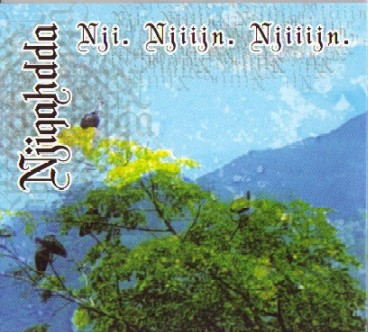
Njiqahdda – Nji.Njijn.Njiijn (J)

A few months ago I did a review of Njiqahdda’s (pronounced Nee-Gee-Kaa-Da) astounding 2007 debut, “Njimajikal Arts,” which consisted of black metal flirting with funeral doom metal, shoegaze, ambient, and psychedelic rock. One year and 9 (NINE? HOLY GOD) releases later, we are presented with the highly experimental and crushing full-length release, “Nji.Njiijn.Njiiijn.”

In “Nji.Njiijn.Njiiijn,” we see Njiqahdda distance themselves from the shoegazer elements of previous releases and instead incorporate more drone and noise influences into their songs. To accommodate the new drone-influenced direction, this release features a much thicker, crunchier distortion on the guitars and bass as well as the incorporation of more field recordings and background noise/fuzz. These elements make this CD much more monotonous, but in a good, EARTH kind of way. The riffs drone on and repeat as more and more fuzz enters the background until you have this wonderful melodic noise that ebbs and flows (hey, I used that phrase about the last album, too! Hooray consistency). This is the kind of album you listen to alone whilst spacing out in a dark room (perhaps with candles, too, if you’re into that stuff).

Unfortunately, this album didn’t wow me as much as “Njimajikal Arts,” considering that album set a new threshold of expectance for atmospheric black metal, BUT this album is still great, nonetheless.

Recommended for fans of: Darkspace, Nachtmystium, Drudkh, Agalloch, and all the other bands I mentioned in the other Njiqahdda review.

Low - Drums & Guns (J)

Low was the band that marked the beginning of the end of my metal days. Never before had I heard such emotional intensity from 3 people, let alone a Mormon family.

Low is married couple Alan Sparhawk, who plays guitar and sings, and Mimi "Mim" Parker, who sings and plays a modest drum kit, comprised of a floor tom and a single cymbal, played exclusively with brushes (not the hair care product) instead of drumsticks, along with the help of bassist Matt Livingston, who left Low in February 2008.

Low is credited with the creation of a style of music called "slowcore." Originally used as an inside joke within the band, slowcore is now considered a legitimate genre. Slowcore is, as defined by Wikipedia, "a subgenre of alternative and indie rock. The music of slowcore artists is generally characterized by downbeat melodies, slower tempos and minimalist arrangements. The term is generally used interchangeably with sadcore." Notable slowcore artists (besides Low) are Dirty Three, Codeine, Galaxie 500, Bon Iver, and Slowdive.

Low's sound is characterized by Parker's consistent-yet-barely audible drumming, Sparhawk's sparse guitar parts, and, of course, the astounding vocal harmonies between the two. Critic Denise Parker stated that Sparhawk and Parker's harmonies are "as chilling as anything Gram [Parsons] and Emmylou [Harris] ever conspired on -- though that's not to say it's country-tinged, just straight from the heart."

Musically, "Drums & Guns" is very different than previous releases, this time the band delves deep into the realm of "minimalist pop," relying more on their voices (note the a Capella "Belarus" and the a Capella intro to "Your Poison") than instruments, which are rarely played. For the most part digital drums and keyboards are used instead of their acoustic counterparts, though electric guitars and acoustic drum loops are used liberally. Though this release hearkens a new, minimalist era for Low, this change is widely accepted and encouraged.

Since they had more time to concentrate on their voices, Alan and Mimi's vocals are nothing short of perfect on "Drums & Guns." Mimi's sense of when to harmonize with Alan (note the irregular harmonic timings in "Violent Past), along with which scale and mode (check out the exotic harmonies in "Sandinista") is pure genius.

"Drums & Guns" is a political album, yet the only time that Low openly shows their political side are the songs "Sandinista," whose song title refers to many a war-protest folk song, and "Pretty People," the droning introduction, where Sparhawk gives a list of everything that is "gonna die," expressing his opinion that the war in Iraq isn't going to end even when the soldiers are all gone. Lyrically, the rest of this album deals with religious devotion ("Murdrer"), sappy love ("Hatchet"), hardship ("Dust on the Window," "In Silence," "Take Your Time"), and Sparhawk's eternal battle with drug addiction ("Dragonfly").

The standout track of the entire release is definitely "Murderer," the penultimate track. As explained by Alan on the Low Documentary (named for the song) "You May Need A Murderer," "Murderer" is an explanation that if God were to tell Sparhawk to give up his possessions, his house, his life, and he had to take his family anywhere to start anew, he'd do it. If God told him to kill someone, he'd do it. This song deals with intense religious devotion in a much more serious manner than, say, Christian rock bands who "Lift the Lord's Name on High." This is real, Moses-like devotion. "Murderer"'s haunting melodies will stick in your head for days, if not weeks. Last.fm (a music networking site) proclaims that on my computer alone I've listened to "Murderer" 19 times, which may not sound like a lot, but I have a tendency to listen to entire albums in one sitting, along with the fact that I have 120 Gigabytes of music.

This album can appeal to almost anyone (even my sister enjoys this, and she listens to the Disney-owned artists. You know, Miley Cyrus, The Jonas Brothers, e.t.c.), and, mind you, I was a metal head when I first listened to Low. This was undoubtedly my favorite release of the past year, if not decade.

Recommended for fans of: music in general, but more seriously, Arab Strap, Red House Painters, Coldplay, Slowdive, Yo La Tengo, and Sun Kil Moon.

Current 93 – Black Ships Ate the Sky (J)

The kingdom of neofolk hails its king, David Tibet, whose groundbreaking solo project, Current 93, has kept a firm grip at the head of the neofolk movement (with good friends Death in June and Sol Invictus). Throughout its 24 year existence, Current 93 has covered vast expanses of music in his consistent, year-by-year releases, experimenting with industrial/post-industrial, classical, medieval, noise, a capella poetic readings, and, of course, folk/singer-songwriter.

At first glance, the CD cover of “Black Ships Ate the Sky,” one is reminded of David Johnston’s work (see my review of Jandek’s “Ready for the House” if you wish to learn about “outsider music.”), silly, childish, and irreverent, thanks to the crude Jesus in the center, most likely drawn in crayon. Released in 2006 Anno Domini, “Black Ships Ate the Sky” is an in-depth journey into the obsessive madness that is David Tibet.

“Black Ships in my eye! Black Ships ate the sky!”
“Black Ships” features many, many guest vocalists, including (in track order) Marc Almond, Bonnie ‘Prince’ Billy (a personal favorite), Baby Dee, the mysterious Antony, Clodagh Simonds, Cosi Fanni Tutti, and Shirley Collins. Most tracks feature David Tibet’s strange, atonal storytelling voice, but thanks to these guest vocalists, David is able to concentrate more on his songwriting, as well as experiment with different styles within his folk realm, such as Appalachain-tinged blues (note the banjo on the first “Ideumea” with Bonnie ‘Prince’ Billy) and Nick Drake “cluster (jazz) chords.” Think of this album as an expansion on the “Inmost Light” trilogy (“Where the Long Shadows Fall (Beforetheinmostlight),” “All the Pretty Little Horsies (The Inmost Light),” and “The Starres are Marching Sadly Home (theinmostlightthirdandfinal)”).

Emotion and tone on this album range from, but definitely are not limited to, madness (“Black Ships in the Sky”), resign (“Ideumea” w/ Bonnie ‘Prince’ Billy), and thoughts on religion (“The Autistic Imperium is Nihil Reich”). Tibet’s lyrics have been fairly consistent, regardless of delivery: The earlier recordings reflect his preoccupation with death, Christ, mysticism, Aleister Crowley, Tibetan Buddhism, Gnosticism, Weltschmerz, nihilism, Noddy, and a variety of occult notions. The later to present-day period of Current 93’s recordings increasingly reflect Tibet’s interest in Christian mysticism.
Though most had thought David Tibet had reached his pinnacle long beforehand, “Black Ships Ate the Sky” is here to prove us all that Tibet has many, many more albums left in him. Expect a new release later this year or early 2009.

For fans of: Death in June, Sol Invictus, Bonnie ‘Prince’ Billy, Nick Drake, Birch Book/In Gowan Ring, Comus, Agalloch, and much, much more. A very accessible release.

Bonnie 'Prince' Billy - The Letting Go (J)

At first thought, with a stage name like "Bonnie 'Prince' Billy" and having the label "Alternative-Country," Will Oldham's music could only spell trouble for the country-despising country that we live in (save Texas). I was expecting some sort of "hootenanny" with some bluegrass banjo, fiddle, perhaps a jug or two playing in the background.

Yet again, I was wrong (it tends to happen to me a lot).

A cousin of mine (who, incidentally, got me into the band Low, whose CD "Drums & Guns" I have reviewed for this month) told me to check out Bonnie 'Prince' Billy, and due to my cousin's supreme musical awesomeness, I could no longer put off my intrigue with Mr. Oldham's strangely-named side project. And I must say, I am eternally grateful to my cousin Suzanne for helping me out.

When it comes to B'P'B, the label "alternative country" confuses me. Yes, there are some rather east-Texas-y vocal harmonies in "Cursed Sleep" and the rather Southern Blues-y-ness of "Cold & Wet" may give Mr. Oldham's release a rather country-like atmosphere, but overall this release is much more performed "an hommage" to singer-songwriter greats Nick Drake, Leonard Cohen, and Bert Jansch.

Lyrics on this release are much different than the rest of the Bonnie 'Prince' Billy discography, which deal more with metaphorical sexual images. "The Letting Go" tends to deal with more tender, cute, "lovesy" lyrics; almost like a love poem. A great example of the "sweet" characteristic of the lyrics can be seen in my personal favorite track, "A Strange Form of Life":

"and the softest lips ever
25 years of waiting to kiss them
smiling and waiting
to bend down and kiss twice
the softest lips."

Will's voice for most of the CD is a calm, almost spoken-yet-still-sung crooning voice, reminiscent of Leonard Cohen, though, at times in songs such as "Cursed Sleep" and "The Seedling," he lets his voice soar on its raw emotional power.

Musically, "The Letting Go" is very diverse. Normally, Oldham would release a disc with either the soft, Nick Drake-esque string-accompanied songs, or the more American folk-y songs (ranging from Appalachian folk to Western-tinged folk, reminiscent to that of the aforementioned Steve von Till), yet on this release, Oldham mixes up his writing styles, which is a treat.

On this release, Oldham is joined by Psychedelic Folk artist Faun Fables, also known as Dawn McCarthy, on harmonies. Ms. McCarthy's harmonic sense is amazing, and her voice complements Oldham's voice perfectly. Her range is rather large, ranging from the mid-range/low tones of "Wai" to the shockingly high notes of "Strange Form of Life." Dawn's voice creates a feeling of wholeness - a complement or second half. Considering this release deals more with emotional love as opposed to physical, having a woman alongside Oldham really helps the "love" idea succeed.

Overall, currently "The Letting Go" is one of my favorite albums. I recommend listening to this release and just letting your emotions run wild.

For fans of: Nick Drake, Steve von Till, Agalloch (The White EP), Buffalo Springfield, America, Neil Young, Woven Hand, 16 Horsepower, Iron & Wine, and Low

Monday, June 30, 2008

Vanessa van Basten - La Stanza di Swedenborg (J)

Post-Rock - Wikipedia defines this as "simply rock instrumentation for non-rock purposes." Of course, nowadays lots of bands comprised of people who have only heard Explosions in the Sky (snicker) only once, if even that, decide that their music is also post-rock. This sends the genre into a downward spiral of tremolo picked, delayed leads over whatever the hell they want. In fact, it seems that the only defining trait of what most people know as "post-rock" seems to be that bullshit airy lead. Vanessa van Basten knows this, and they hate it.

Hailing from Italy, Vanessa van Basten takes influence from not only the classic shoegazers, but also modern classical visionaries such as Morricone and Steve Reich, and even heavy industrial like Godflesh. All of this melded together with a love for obscure Italian movies comprises "La Stanza di Swedenborg."
This full-length, released in 2006, ranges from lush, thick soundscapes, as in the title track, to droning melodic feedback (Vanja), and even American-Western slide guitar (Giornata de Oro). Melodies found on this release are unpredictable, at times, such as the track "Dole," which follows a very jesu-like, dreamy path, but this is abruptly interrupted by an almost black metal-like minor-chord-which-is-then-moved-down-a-half-step. Hell, in "Giornata de Oro," a slide guitar with enough reverb on it to make it sound like a dying rodent comes out of nowhere; it is almost frightening. Tonality on "La Stanza" is very fickle, ranging in emotion from happy-go-lucky, paranoia, loss, anger, and so on. With such a vast array of feelings, this record never fails to surprise every listen (which there have been a lot of).

Recommended for fans of Slowdive (or any classic shoegaze band for that matter), jesu (or any post-metal band), Ennio Morricone, Godflesh, nadja, and so on.

Opeth - Watershed (J)

The past few years have been very rocky for Opeth: they lost two members, one an original member who was a necessity as far as songwriting goes. This was probably one of the most anticipated and simultaneously dreaded releases in the metal community this year. What with Martin Lopez being replaced by prolific death/thrash metal drummer Martin Axenrot and Peter Lindgren being replaced by Krux and ex-Arch Enemy shredder Frederik Akesson. According to speculation, this was going to be the disaster that would spell the end for Opeth.

Everyone was proved wrong. This is one of the strongest Opeth releases yet, rivaling such masterworks as "My Arms, Your Hearse" and even "Still Life." The musicianship is at its tightest in years and now Per Wiberg's keyboard presence isn't overbearing as it was on "Ghost Reveries." Since there is just so much going on in this release, I will be doing a *gasp* track by track review.

The disc starts off with "Coil" - a folk song. This song is driven by a jangly 12-string guitar and goes in immediately; there is no intro. The track's highlight is by far the female vocals, contributed by Swedish folk singer Nathalie Lorichs, who is, coincidentally, Martin Axenrot's fiancee. The first track then drones and slightly builds up to the monolithic dissonant chords that begin the epic "Heir Apparent," which is, by far, the most bizzarre song on the entire disc. This song is the most technical song Opeth has ever done, with fret-dancing riffs and even a tastefully done shreddy guitar solo, if that is indeed possible. Also, this song contains the fastest Opeth riff yet, a blistering death/thrash metal riff, more than likely written for or by Axenrot. Right when you think the song is over, there is a volume swell which segues into the traditional "Opeth part," slow, dirge-like guitars and drums with some sort of minimalistic guitar lead over the top, making a very epic atmosphere. Great song, this one is.

"The Lotus Eaters," when released as a single about a month before "Watershed" was released, confused a lot of people. Why? Two words: blast beats. Opeth has never ventured into this sort of progressiveness (or as an elitist would say: PHILISTINE BULLSHIT) before. And ontop of the bast beats, what do we have? None other than Mikael Akerfeldt's clean vocals, returning from their absence in "Heir Apparent." This song also brings back the traditional "Opeth beat," a 6/8 groove with the drums doing something like "do doDAdo do doDAdo." Essentially, this is a beefed up Still Life song. The high point of this song is definitely the blast beats, which are sure to catch listeners off guard.

Next comes "Burden." I like to think that the reason Opeth wrote this was because they went on a week-long Whitesnake bender and needed to write something extraordinarily cheesy. This is a ballad. A cheesy-clean-vocal-extended-keyboard-solo power ballad. Not that this is a bad thing, though, for this is Opeth's take on the traditional metal ballad. A solid, yet unexpected, song. "Porcelain Heart" follows suit. I find this to be the weakest song on the release. It sounds like it was written right after, if not during the "Ghost Reveries" sessions. Yet again, no growling from Mikael in this song. Not really much to say about this song. Track highlight: the baroque-sounding classical guitar part.

Now comes the 11-minute epic, "Hessian Peel." This song starts off with a rather old-school Opeth part, with an acoustic guitar underneath a rather melodic lead. This moves on for a while, venturing into some 70s progressive rock, when suddenly death metal rips through the song and punches you in the face. Yet again the guitarwork shines as Frederik's fingers dance around the fretboard in another finger-shredding guitar solo - normally I hate those, but there's something about Frederik's phrasing that is great. Probably the strongest and catchiest track on the release.

Now, finally, the end. "Hex Omega" immediately barges in with a "Blackwater Park" type riff which drops out leaving Mikael singing and keyboards. Suddenly everything gets rather Egyptian sounding and then returns to the "heavy" sound, if you would call it that. This is almost like if Opeth took a Damnation song and made it metal. Pretty cool, if you ask me. Yet again another guitar solo, though not as flashy. This track features some very cool mellotron work from Per Wiberg. The song has a very long outro, akin to the ending of "A Fair Judgment," though much more interesting as a result of the use of dual guitar harmonies and tribal drum work.

Overall, "Watershed" is a triumph from the Opeth camp; redemption from the slight disappointment that is "Ghost Reveries." The venturing into other genres help Opeth rebuild their trademark sound to escape the doom that is monotony.

October Falls/Varghkoghargasmal - Split (J)

This release confused me; I am a HUGE October Falls fan (note the review of Sarastus 2 months ago), but Varghkoghargasmal (quite a name they have there) has failed to impress me in the past. V's previous releases have pretty much cursed my ears with out of tune guitars and off-beat drums. But I'll get to them later.

October Falls's song "Polku" is yet another folky journey through the deepest of Finland's forests. A bit stronger than Sarastus, this piece is a harkening back to the olden days of Marras and Tuoni, with long, drawn out, dirge-like acoustic folk songs. Of course, this is more of the same, which may pose a great boredom for those who wish to hear something different, but I, as stated earlier, am a fan of whatever Mikko Lehto does, and if it means more of the same, I welcome it with open arms. Of course, there is an addition to the overall equation of October Falls's songs, for now Mikko adds in whispered vocals to add a little extra something to the mystical sound. A great effort from the October Falls front, in my opinion, and I cannot wait to hear how "The Womb of Primordial Nature" turns out.

Back to Varghkoghargasmal, this addition to his discography is interesting, if not an improvement on the older songs. As if he learned the ropes of music theory and timing, Varghkoghargasmal has risen from the grave and written a half-decent song. "Frame of Stones" features not only in-tune guitars, but also on-time drums, which is astounding considering how god-awful his previous efforts were. In addition to the guitar and drums, a xylophone has been added to the mix, which sounds a little ridiculous and almost silly at first listen, but it grows on you. What IS silly about this song is that Varghkoghargasmal still thinks he makes pagan metal, even though this is more folky than anything, and throws in a bluesy guitar solo just to confuse everyone.

Overall this is a solid release. October Falls fans will rejoice over the rebirth of the old sound and people will finally hear a halfway decent song from Varghkoghargasmal.

Jandek - Ready for the House (J)

There are two opinions you can have when you listen to Jandek: it's dissonant, juvenile, movementless music, OR it is the most emotionally deep sound you have ever heard.

Jandek's disturbing yet close-to-home tunes fall into the genre of "outsider music," otherwise known as music that doesn't fall into a conventional norm or music made by those with mental disabilities or issues. Notable outsider artists include Syd Barrett of Pink Floyd fame, Brian Wilson of the Beach Boys, and Daniel Johnston.

No one really knows exactly who this "Jandek" character really is. Due to his consistent releases (bordering 50 since his debut in 1978), some speculate that Jandek is rich stockbroker Sterling Smith, reclusive head of Corwood Records, Jandek's hosting label. Others believe that the project is a joke, and some think that these are the recordings of a millionaire's retarded son. Jandek has been a part of 2 interviews in his quarter-century music career, and made his first live appearance in 2004, unnanounced. Since then he has played just a handful of concerts, varying greatly in performance.

Jandek's sound on "Ready for the House," his 1978 debut, is characterized by a guitar tuned to an unconventional open tuning strumming awkward one-note-at-a-time "riffs," I guess they would be called that, beneath a mournful (and very amateur) voice, normally singing in some sort of blues or folk fashion. Electric guitars appear in songs, as well as very awkwardly played drums played by a neighbor, Josh. Occasionally a female vocalist, presumably named Nancy due to her debut song, "Nancy Sings," will appear, singing some sort of haunting melody.

Lyrics on this disc are rather abstract, ranging from old hymns (Show Me the Way, O Lord) to the extraordinarily bizarre (Naked in the Afternoon). One thing is certain, however: Jandek has a strange and extraordinarily dark view of the world. Though his music sounds rather unappealing and harsh on the ears at first, Jandek's sound really grows on you, for some strange reason. I recommend trying to listen to an album in its entirety in one sitting; I attempted it once and had to pause the music 4 songs in just to regain my composure. I was shaken, to say the least.

Jandek's fan base is extremely small, but therein lies important musical figures including, but not limited to David Tibet (Current 93), Alan Sparhawk & Mimi Parker (Low), Kurt Cobain (Nirvana, Earth), and Conor Oberst (Bright Eyes).

In order to obtain Jandek's albums, write a letter to Corwood Industries, P.O. Box 15375, Houston, TX 77220. One disc is $8, but you can get 20 for $80, which is quite a deal. And who knows, Jandek might write you back in his mangled writing. At one point in everyone's life, their ears scream for Jandek's music.

Saturday, May 31, 2008

Nasheim - Evighet/Untergang (J)

Long have I been a Noltem fan, and even after knowing that Erik did session vocals for the "Hymn of the Wood" demo, it took me the two years

I have been a fan of Noltem to check this out.

I'm glad I did.

This compilation of the two demos, Evighet and Undergang, is nothing short of amazing. After months of trying to find deep and meaningful black metal outside of the realm of bands I listen to, I found myself listening to Nasheim, and these guys really know how to bring empowerment back to black metal.

Seeing as the trend of "Depressive/Suicidal Black Metal" is really taking root now, people tend to overlook bands that empower the listener, as black metal was originally supposed to do, it is great to see bands that "bring the epic" like Nasheim that are still making music.

Onto the music, the fuzzy guitars add a lot of personality to the cd, like I am wandering in a deep and dark Northern Swedish forest with a ram's horn of mead and a fresh kill slung over my shoulder.

Even the bass is noticeable in this, with little doodles here and there, adding even more variability to Nasheim's style.

The drums are your standard black metal fare with alternating blasts and ambient cymbal work along with the standard slow beat with lots and lots of ride and crash cymbals. This does not add on anything really to the album, but it does not detract either.

The shining and standout quality of Nasheim have to be Erik's vocals, though very high in the mix, his vocals are powerful and mournful. I cannot say that Erik's vocals sound like any other I have heard yet; they are highly original black metal rasps (thought you'd never hear someone say that, did you?).

There is even an amazing cover of Bathory's anthem "Blood Fire Death" included in this compilation that takes my breath away. Quorthon would be very happy with this cover out of the many there are.

My one complaint with the demo is the quality of the song "Evighet." Though it is a great song and the dual vocal work is interesting, the all-treble sound quality of black metal is hard on my ears and is rough enough to have me take off a touch from a perfect score.

For fans of: Ulver, Wolves in the Throne Room, Angantyr, Agalloch, Noltem, Wind Through the Trees, Dornenreich, Herbst...

Nadja - Long Dark Twenties (J)

Well, today I decided I was going to get back into Nadja, and it's a good thing I did. I must have grabbed about one and a half gigabytes of releases (I'm almost done!) and by far this EP has stuck out as one of Aidan Baker's most beautiful works.

This song is has its similarities and differences from the rest of the nadja discography. The standard thick-and-slow-as-chilled-molasses rhythm riff over an industrial drum machine is still apparent, but this release has more similarities to shoegaze mainstays such as Slowdive or My Bloody Valentine.

Aidan's light vocals are mixed much higher above the music than before, but this isn't a bad thing. One can definitely make ties to Justin Broadrick's work in Jesu just by hearing the vocal work.

Wonderful ephemeral guitars flutter in the background and mingle with keyboards and flutes, giving this piece a very light and airy feel, contrasting the heavy sludge riffing beneath.

Overall, this EP is beautiful, one of Aidan's best, and I highly recommend it to anyone who is a fan of doom metal, shoegaze, or even ambient music.

Tuesday, April 29, 2008

Shape of Despair - Shades Of... (J)


Safe to say, this is my favorite release out of the entire funeral doom genre. Such power and emotion conveyed throughout the duration of the disc is unmatched in the metal world.

Slow, plodding riffs with REAL instruments (along with keyboard arrangements) dominate this album. Songs such as opener "...In the Mist" have waltzy feels with 6/8 rhythms, though I don't believe anyone will be waltzing to this.

The male vocals on the album are very powerful, a more voiced version of fellow countrymen Skepticism with a slight nasal quality, shared with very gentle, soaring female vocals. The lyrics written for "Shades Of..." are profoundly sad, telling of a traveler who is banished from his town and is doomed to walk the Earth for eternity, unable to die. Speak of "[his] frozen feet" add on much to the rich, despondent atmosphere displayed through the cold folky-orchestral arrangements and wall-of-noise guitars and slow, plodding drums in the backgrounds.

Rhythm does not vary from song to song, which might turn many away, but I view this 5-song masterpiece as one piece of music divided into 5 movements, like, say, a Dream Theater CD (though I would never even think of comparing the two).

This is a very good introductory album for someone who wishes to get into funeral doom metal. The many melodies that occur simultaneously, though slow, are very catchy and clutch you in their icy grip, not letting go until the cd is over, and you still want to hear more.

Favorites (though each song is amazing):
...In the Mist
Woundheir
Sylvan-Night

Njiqahdda - Njimajikal Arts (J)


Njiqahdda really came out of nowhere this year, and I still can't find out who this guy is. Rumor has it that he's the guy from Light Shall Prevail, the unblack metal band from Illinois, but there is no concrete evidence. All we know is that this elusive character has just been producing music in spades this year, and great music at that.

On this release, Njiqahdda takes the standard atmospheric black metal formula, lets it ferment for a few years, and serves it chilled as the fine wine it is. Not only is this atmospheric black metal, it's also funeral doom, psychedelic noise, dark ambient, and even shoegaze in the last song of the first cd. Njiahdda has obvious influence from bands such as Nachtmystium, Vinterriket, Agalloch, and Shape of Despair, along with ambient projects Maeror Tri, Troum, and even middle-era Ulver.

The first disc is comprised of three lengthy metal songs, ranging from 9 minutes to almost the 30 minute mark. These pieces ebb and flow like the tide and enshroud the listener in lush soundscapes.

The second disc is two very long, minimalist ambient pieces around 22 minutes in length apiece. Normally built of of a small melody (around three notes), that melody remains constant and is then accompanied by drones or field recordings (one sounds like windchimes). Very relaxing and has almost qualuude-like effects.

Amazing release, one of the best of 2007. Keep an eye out for these guys, the releases are very limited and cost a lot of money ($25 USD), but he just keeps cranking them out, so if you miss one, get another!

October Falls - Sarastus (J)


After months of searching, today I finally got my hands on Sarastus, the lesser-known of the 2 EPs released last year by October Falls's mastermind Mikko Lehto.

Unlike the other release, "The Streams of the End," "Sarastus" is a pure acoustic guitar, flute, and piano release, much like previous releases "Marras" and "Tuoni."

These songs convey similar atmospheres to aforementioned releases, though these songs tend to lean more towards the complex side with many guitar tracks and harmonies galore, unfortunately sacrificing length for complexity, much like Opeth's "My Arms, Your Hearse."

On this release, the guitar tone takes more of a later-Empyrium-like sound, rounded and soft, as opposed to the slightly-sharper acoustic sound of other releases.

A real surprise is track 7, an acoustic rendition of "White Northern Soils," the second track off of the "Streams of the End" EP, one of the more powerful songs off of the 4 song EP.

Overall, this EP is nothing short of wonderful, though I will take off 2 points due to the shortness of this release.