Showing posts with label folk. Show all posts

Saturday, February 28, 2009

Mount Eerie – Lost Wisdom (J)

"10 songs recorded quickly and quietly during a surprise visit by Julie Doiron, keeper of the world’s greatest and saddest voice, and Fred Squire, hidden guitarist of the floating riff, in a small wooden room in Anacortes, Washington before they returned home to eastern Canada. Songs with the expression of the face of a baby in a burning world, in the swirling dust. They hang on a theme of impermanence and destroying forces. The river is revealed to be going right through the house, the river of inevitable chaos, sorrow and love." (Taken from Phil Elverum’s site http://pwelverumandsun.com/store)

Yes. Oh my god, yes. Sweet, merciful Jesus, yes. This album is…astoundingly good. But not just good…it’s great. It’s wonderful. It’s tear-jerkingly beautiful. I sat on the train today with this playing, watching the lights whir by as snow fell and it just…made sense.

Coming from my black metal roots, I couldn’t help but chuckle the first time I saw this album’s title (yes, this is a Burzum reference), but take heed, black metal fans, for this will not tickle your Varg/Grishnackh fancy.

“Lost Wisdom” fills every category needed on the good non-metal/rock album checklist:
Is it folk? Yes, yes it is. Check
Is it sad? Oh god, yes. Check
Are there male/female vocal harmonies? Yes. Yes. Yes. Check
Are the female vocals done by Julie Doiron? YES! Check
And last, but probably most important and relevant to this analysis: Was it recorded in a cabin in rural Washington? YES. YES. YES. YES. Check.

This time around, Phil Elverum meant business. After the spring release of the extraordinarily fuzzy, dense, almost metallic “Black Wooden Ceiling Opening” EP, he’s dropped the distortion, keyboards, and drums for a much more organic, desolate sound, and presents ten songs of love, loss, confusion, angst, existential confusion, and loneliness written alone in a cabin in the farthest reaches of Scandinavia. Songs written alone about being alone (how existential *chuckles*); I think this guy’s lyrical credibility went up a few notches in my book.

As mentioned earlier, Elverum enlisted the help of Julie Doiron, holder of the saddest voice on Earth, to harmonize with his quiet, distant yet familiar voice. When I first listened to this album (I feel so bad…I downloaded it off of a blog…), I heard the folky guitar enter with Phil’s voice and was pleased as is, but my eyes widened and my jaw dropped when Julie’s voice came in to complement his. In a romantic sense, their voices were almost meant to be together. Their voices waltz together, trade verses, build a choir behind a lead vocal track…they allow the other to grow their roots in the audience’s ears. This album is built around their voices; without these voices joining hands, the underlying theme of love lost and shared loneliness would be lost.
Elverum puts the acoustic guitar in the background, playing simple droning folky melodies as a backbone to the rest of the music. In this simplicity lies vast beauty and emotional complexity. Would the introduction of the first track be the same without the single note guitar beneath it? Would “Who?” lose its dark, nostalgic tone without the one-chord base? This simple style hearkens back to a more primitive time where music was a vessel to tell stories and express; not to prove technical prowess.

Fred Squire’s electric guitar work beneath Elverum’s adds a new layer of depth to these songs. A light fuzzy-yet-clean guitar flutters behind everything (“hidden” guitarist… “floating” riff…get it?), contributing to dynamics (note the louder strumming during the louder vocal parts in the title track, “Lost Wisdom”). The electric work of Squire gives “Lost Wisdom” the right amount of space to accentuate the loneliness felt by the narrator.

Speaking of loneliness and desolation, these dang lyrics are so bleak and excruciatingly sad, once you understand them, it’s pretty hard to “keep your cool” whilst giving this album a spin. My personal favorite lyrics are those to “O My Heart,” especially the second verse, starting with, “Oh, what’s this?” (following a very tasteful guitar solo):

“Oh what’s this? Is this my heart? Is it thumping? O my heart, there you are; I’ve stopped hunting. I thought you would be as big as a whale. My nets were knit, my heart moves on; I’ve had my ships sailed.”

These surreal lyrics that rely on a very nifty extended simile, surreal in the fact that his heart would be as big as a whale, though if his heart was that engorged he would probably die, but a cool image is seen in the mind’s eye, and the extended simile thus explaining that since the narrator thought that his heart was to be as big as a whale, he knit his net too large and his heart simply fell through the holes in the net, lost in the sea. Of course, his heart is lost in a sea of depression and turmoil; he wasn’t able to save love in time and thus it can’t be saved. Every song on this full-length demonstrates Elverum’s very strong grasp of prose; everything has an alternate, profound second meaning.

Mount Eerie’s “Lost Wisdom” is a wonderful work of deep, honest music. Every song is perfect the way it is, and is put in its logical place in the track progression. Needless to say this is probably my favorite release of this past year. It will accompany me on many coffee-drenched lonely nights and long drives. Let’s hope that Mount Eerie and Julie Doiron’s paths cross again.
Recommended for fans of: Low, Songs: Ohia, Bonnie ‘Prince’ Billy, Syndicate X, Thanksgiving, Charalambides, Nick Drake, Birch Book, Leonard Cohen, Ida, and the like.

Bon Iver – For Emma, Forever Ago (J)

So I’m back in an indie folk rut again, and the best way to summarize my current taste (other than Mount Eerie) is definitely Bon Iver. Yes, sad bearded-man folk music, but a lot more.
Justin Vernon recorded this album alone in a cabin in Northwestern Wisconsin (notice a trend here?) after an extreme breakup and a liver problem. While sitting alone in his cabin, Vernon watched a documentary concerning the Inuit. These people had a tradition of wishing each other a “bon hiver,” or “good winter” in French. Of course, “hiver” reminded Vernon too much of “liver,” which was causing him a good deal of pain, so he removed the H, making the name Bon Iver, which stuck.

Bon Iver is characterized by simple “strummy” folk guitar, occasionally masking a light glitch bass drum track, giving it a more upbeat sound, and, of course, Justin Vernon’s strong R&B-style falsetto vocals. No, not power metal falsettos; I’m talking big black guy-sounding falsettos. Of course, this one track of vocals doesn’t cut it; there needs to be over twenty tracks of Justin Vernon singing various harmonies, countermelodies, and bass tracks. Think of it as a choir of Justin Vernons; a big room of beardy-folk fellows that isn’t a coffee shop or record store (har dee har).

I had the opportunity to miss Bon Iver in concert (with The Tallest Man On Earth, a previously reviewed band), but from bootlegs and videos of live shows, Justin Vernon is accompanied by a live drummer and electric guitarist (does a lot of folk/post-rock/noise stuff O_o), but normally Vernon stands alone vocally, with occasional harmonies from everyone else. This more bleak sound is very pleasing, but a huge diversion from the more lush sound found on the album. Either way, it looks like Justin Vernon aims to please.

An interesting tidbit about Bon Iver live: Justin Vernon doesn’t want to be a one-guy-singing-with-a-guitar artist, so he has been known to hand out lyrics to the audience so they can sing along.

Overall, I like this album. A lot. It’s definitely up there with Mount Eerie’s “Lost Wisdom” for best album of the year, even though it was officially (self-) released last year.

Recommended for fans of: Low, Mount Eerie, Julie Doiron, Chuck Ragan, Neil Young, Steve von Till, and so on.

Thursday, October 30, 2008

Neutral Milk Hotel - In the Aeroplane Over the Sea (V)

Neutral Milk Hotel is a perfect collaboration of the weird and that which every human heart understands and needs. Simple acoustic chords somehow manage not to become at all stale, probably benefited by clever and memorable melodies and the other elements Neutral Milk Hotel uses throughout. The band has full-time brass people, not session musicians, mixes in strangely filthy electric guitars and bass, driving drums, and random eccentric instrumentations. One song will be quick and to the point, another will be slow and thoughtful. One song will slide past with almost meaningless lyrics and an energetic feel, another (in fact, most) are filled with lyrics that tell all the facets of a story at once - not just the usual "I love you" and "my father died" but all the things that happen at every stage in life, the things large and small that make life meaningful and wondrous.

Perhaps the reason I've delayed hunting down any more of their albums is the fact that I don't feel like I'm missing anything from this album - it continues to please and fulfill. I have no doubt that I will continue to cherish this already ten-year-old record for years and decades to come. Well-suited for crying and singing and romance and hurting and loving. And just living. I don't think I would have understood it 5 years ago, but I don't think I'll ever feel even a temptation to get rid of it.

_Algol_/Cloudy Horizon - Split (K)

The internet has given us the advantage to communicate with people from around the world and in case they are artists to enjoy their art (theoretically speaking); even though thousands of miles lie between us. Such happens to exist in terms of _Algol_ & Cloudy Horizon: both of them are projects of the same person: Daniel, a guy from Siberia. His idea is to create ambient music in a variety of styles and this split release offers two approaches on how this might sound.

_Algol_
According to the MySpace site as well as the homepage, the term «space ambient» has been used to describe this project and it is very fitting. The music is very minimalist with a slow progressing melody and reverb in the chords. Only few textures appear at a certain time and accordingly it is very easy to follow the music respectively concept. Spoken passages appear but on a very small scale; opening of «The Total Siberian Eclipse», towards the end of «Dark and Light near the Tannhauser Gates». Noise textures are also used, but not on every track they play a dominant role. There is some resemblance to the art of Vinterriket and hence would fans of this band also like what Algol performs on this split release. It should be noted, though, that the Russian band does not use field recordings and this does differentiate this band from the Austrian one.

Cloudy Horizon
In comparison with _Algol_ the music of «Cloudy Horizon» offers a kind of atmosphere the other project if not able to create. This has to do with the use of an acoustic guitar that plays an important role in the concept; not only in terms of the atmosphere. Further is there a drum-computer playing in the background and also samples from the nature had been used; water play and thunder sound. Beyond these conceptual differences, the most obvious one to the listener is the existence of a beat which keeps the song going. Despite the minimalism which does also appear here, it is easier to get the idea. Both songs are well performed and offer some sort of folk ambient. Both songs are very linear and take the listener through different stages of atmospheres as well as arrangements. Yet all is very calm and without anything that would work as a counter-point towards it.

Ambient interpreted in two different ways, this could be used as a description for this release. Music that is easy to follow, never irritating and also somehow catchy. An interesting release.

Sunday, August 31, 2008

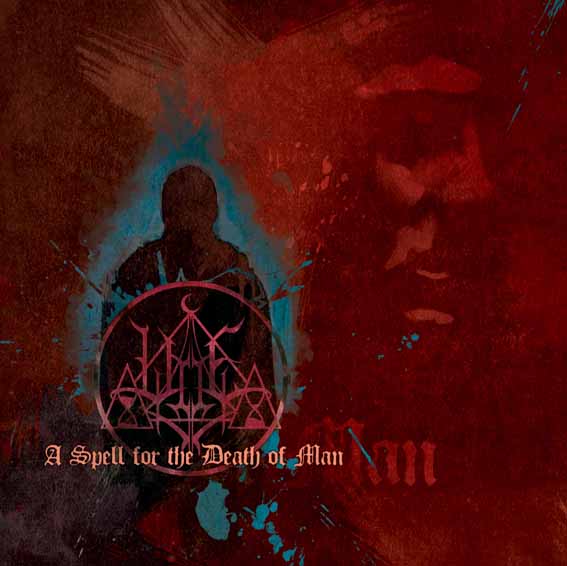
Woe – A Spell for the Death of Man (J)

The USBM scene has been rather slow this past year – hitting its climactic peak with Wolves in the Throne Room’s “Two Hunters” and stopping while the getting was good (I consider Velnias more doom than anything). A few months ago on MySpace (I know…) a band by the name of Woe added me. Judging by the logo and the title of the then-future release “A Spell for the Death of Man,” I simply passed the band off as either a Darkthrone/Immortal worshipping band, or some sort of hazy bedroom black metal project.

Then, a few weeks ago, Woe main man Xos sent out a notification offering a free promotional digital copy of “Spell” for reviewers, so I decided, what the hell, I might as well give this a try. I needed some more black metal anyway; I’ve been stuck in sort of an indie rock/post-rock/shoegaze rut for the past 2 months or so. Not that that’s a bad thing.

I’m definitely glad I gave Woe a chance – this is by far one of the more crushing and powerful black metal releases I’ve heard.

Hailing from Philadelphia, Pennsylvania, Woe delivers a highly misanthropic, folk-tinged sort of atmospheric raw black metal, ranging from dreamy stand alone wall-of-noise guitars to blasting full-on oppressive black metal.

In this recording, Xos concentrates more on guitar and drum work above everything, with vocals semi-buried into the mix, sounding like a howling wind (which is very nice, by the way). Emotion is key on this album, accentuating the depression and misanthropy of the author. Yes, I said the taboo word in this review: depression, but this isn’t a “depressive” black metal release per se. It is sad, but not the whole recorded-on-a-4-track-recorder-in-my-bedroom-with-wailing-and-whimpering depressive black metal that everyone immediately thinks of. Imagine Drudkh jamming with Wolves in the Throne Room and a crust punk band, and you’re halfway there.

Xos’s drumming on “Spell” is highly technical; full of blast beats, drum rolls, complex beat changes, and the like. The percussion definitely adds that extra “oomph” when it comes to intensity. Perhaps my favorite moment on the CD is a short burst of almost Envy-like post-hardcore/screamo in “Longing is all that Will Remain.”

Definitely a wonderful start for Woe, and I can’t wait to see what Xos cooks up for future releases.

Recommended for fans of: Panopticon, Drudkh, Wolves in the Throne Room, Darkthrone, early Agalloch, Wrath of the Weak, Njiqahdda, and Velnias

Steve von Till – A Grave is a Grim Horse (J)

Since 1983, Steve von Till has shaken the earth beneath our feet playing guitar and providing vocals for the legendary Sludge/Post-Hardcore monolith that is Neurosis. Eventually, in 2000, von Till released his first solo album, titled “As the Crow Flies,” bearing a striking, albeit slower, resemblance to classic singer-songwriter Bob Dylan. That being, in 2002 von Till followed up his first release with “If I Should Fall to the Field,” a much more in-depth recording, featuring slide guitars and orchestral backing to contrast his low, somber voice.

Six years pass due to his prior engagements with Neurosis, and his latest release finally arrives.

“A Grave is a Grim Horse” is, personally, von Till’s most powerful release to date. While still containing the usual droning guitars and raspy voice, this album has a much more “desert-sounding” motif. Hell, the first time I listened to the title track, I closed my eyes and vividly pictured myself driving a rusted pickup truck down a desert highway, with the wind in my hair, but then again, that’s my overtly romantic view of music talking.

“Grave” has some of Steve von Till’s most memorable and catchy vocal lines throughout his entire discography. The simple pentatonic (bluesy) crooned chorus of “The Acre” is one of those melodies that sticks in your head for days, but, luckily, isn’t one of those torturous 90s pop sensations that tell you what you “really really want.”

For me, the stand-out track on this release has to be the cover of Nick Drake’s “Clothes of Sand,” but that’s mainly due to my obscene love of Nick Drake’s recordings. Von Till most definitely does Nick Drake justice with this track, which is unfortunately the shortest song of the entire disc.

As stated earlier, a distinct desert/western/cowboy/country motif is very prevalent in “A Grave is a Grim Horse.” Songs such as “Willow Tree” are excellent examples of this, with multiple layers of fiddle (slow fiddle, not cousin-fucking fiddle) and slide guitar to give it that nice down-home southern feeling.

Overall, I find “A Grave is a Grim Horse” to be one of the most powerful and emotionally moving pieces of this year, containing some of the most somber melodies to ever enter my cranial cavity.

For fans of: Nick Drake, Bonnie ‘Prince’ Billy, America, Buffalo Springfield, Crosby, Stills, Nash, and Young, Neurosis, and Wolves in the Throne Room (just to throw everyone off).

Six Organs of Admittance - Days of Blood (C)

I picked up this album at the Century Plants/Sunburned Hand of the Man show I went to back in February but never really gave it a proper listen until now. I don't know much about Six Organs of admittance, and even less about the album. When I bought it I wasn't really sure what it was, it was a bootleg being sold by a member of Sunburned Hand of the Man who is also a member of Six Organs of Admittance… And that's about it. Well I was inclined to give the album a much-overdue listen after I finally got my turntable set up, and I must say I was quite upset that I waited so long. Now, I was a bit surprised since I was somewhat familiar with them via the split with Om, and knew that they were Psych Folk… But the album starts in a more straight forward acoustic piece which lasts for almost the entirety of the first side, with a brief foray into the world of those familiar psych-folk sonicscapes we're so familiar with. The second side is practically an inversion, with a bit of that acoustic folk giving way to nearly an entire side of psych-folk. The best part about the second side is the closing, however, which is a clear transition into a sort of bouncy unapologetic folk-rock with distinct 6OA flavor. The album really becomes a strange and varied voyage across the sea of psych folk, but not manages to remain a cool and calming voyage.

Just a few notes about the album however… I guess it's a live album, I'm not really sure. There's clapping at the end of the last track, but I didn't really notice anything else anywhere. The album came with a cool little interview booklet thing that alluded to a lot of obscure gigs and such I didn't really understand, but yeah. Definitely worth a check out any time.

Bonnie 'Prince' Billy - The Letting Go (J)

At first thought, with a stage name like "Bonnie 'Prince' Billy" and having the label "Alternative-Country," Will Oldham's music could only spell trouble for the country-despising country that we live in (save Texas). I was expecting some sort of "hootenanny" with some bluegrass banjo, fiddle, perhaps a jug or two playing in the background.

Yet again, I was wrong (it tends to happen to me a lot).

A cousin of mine (who, incidentally, got me into the band Low, whose CD "Drums & Guns" I have reviewed for this month) told me to check out Bonnie 'Prince' Billy, and due to my cousin's supreme musical awesomeness, I could no longer put off my intrigue with Mr. Oldham's strangely-named side project. And I must say, I am eternally grateful to my cousin Suzanne for helping me out.

When it comes to B'P'B, the label "alternative country" confuses me. Yes, there are some rather east-Texas-y vocal harmonies in "Cursed Sleep" and the rather Southern Blues-y-ness of "Cold & Wet" may give Mr. Oldham's release a rather country-like atmosphere, but overall this release is much more performed "an hommage" to singer-songwriter greats Nick Drake, Leonard Cohen, and Bert Jansch.

Lyrics on this release are much different than the rest of the Bonnie 'Prince' Billy discography, which deal more with metaphorical sexual images. "The Letting Go" tends to deal with more tender, cute, "lovesy" lyrics; almost like a love poem. A great example of the "sweet" characteristic of the lyrics can be seen in my personal favorite track, "A Strange Form of Life":

"and the softest lips ever
25 years of waiting to kiss them
smiling and waiting
to bend down and kiss twice
the softest lips."

Will's voice for most of the CD is a calm, almost spoken-yet-still-sung crooning voice, reminiscent of Leonard Cohen, though, at times in songs such as "Cursed Sleep" and "The Seedling," he lets his voice soar on its raw emotional power.

Musically, "The Letting Go" is very diverse. Normally, Oldham would release a disc with either the soft, Nick Drake-esque string-accompanied songs, or the more American folk-y songs (ranging from Appalachian folk to Western-tinged folk, reminiscent to that of the aforementioned Steve von Till), yet on this release, Oldham mixes up his writing styles, which is a treat.

On this release, Oldham is joined by Psychedelic Folk artist Faun Fables, also known as Dawn McCarthy, on harmonies. Ms. McCarthy's harmonic sense is amazing, and her voice complements Oldham's voice perfectly. Her range is rather large, ranging from the mid-range/low tones of "Wai" to the shockingly high notes of "Strange Form of Life." Dawn's voice creates a feeling of wholeness - a complement or second half. Considering this release deals more with emotional love as opposed to physical, having a woman alongside Oldham really helps the "love" idea succeed.

Overall, currently "The Letting Go" is one of my favorite albums. I recommend listening to this release and just letting your emotions run wild.

For fans of: Nick Drake, Steve von Till, Agalloch (The White EP), Buffalo Springfield, America, Neil Young, Woven Hand, 16 Horsepower, Iron & Wine, and Low

Monday, June 30, 2008

Thought.Image.Sound - Spread Against the Sky (V)

This is certainly the beginning of a new chapter for TIS. Spread Against the Sky effectively transitions from the glitchy, feedback-soaked noise of past work and collaborations with NTRLWRM to a sort of minimalist, meditative expression of echoing guitar and bass work. The first two tracks, "A Thousand Shades of Night" and "Rabbit Fence," are mostly improvised and center on the use of effects and effects loops and twisted, smashed guitar sounds. Each is a slowly building experimental work, layering interspersed chaotic strumming and ambient drone. "Rabbit Fence" eventually crashes its way from glitchy distorted chaos to softer chaos that brings the word "ambiance" and even "melody" directly to mind.

My favorite track while the record was still in progress, "A Touch of Frost" sounds like pure decanted atmosphere. You can hear the melancholy chords drifting out across the mountains. You can feel TIS sitting and staring into the melancholy of the abyss. Slowly, the guitar and bass build and drop and flow into the delay-harmonised melody of "An Aging Statue." This statue is lonely. Introspective. Quiet. Then the modulated fingerpicking of "Drifting Away" builds tension, rather than releasing it and ending this album's chapter. I'm waiting for the next TIS release, so I can see where this is going. Get this.

The Tallest Man on Earth - Shallow Grave (C)

Well, let me preface this review with a story. I started listening to The Tallest Man on Earth in just about the last week of school or so. On a whim, a couple days after I moved back home from school I decided to look on The Tallest Man on Earth's myspace to see if he had any show dates. So I was cruisin' and lookin' and the second date or so on their tour space, which was a convenient very small US tour sponsored by friends of the artist, said "ALBANY, NEW YORK - LOSBSTERPALOOZA - WASHINGTON PARK 3:00pm". Immediately my mind shot to flashbacks of three days before at Baccalaureate, the night before moving out day, when my parents were joking around and telling everyone that we had to "Hurry home tomorrow because it's Lobsterpalooza across the street!". The next day I was all cranky and tired and didn't want to go to stupid-ass Lobsterpalooza, of course, because who in god's name that matters goes to Lobsterpalooza? Well, two days after Lobsterpalooza boy was I regretting that decision. "FUCK FUCK FUCK I COULD HAVE SEEN THE TALLEST MAN ON EARTH ACROSS THE STREET FUCK I MISSED A ONCE IN A LIFE TIME CHANCE SHIT" was how I pissed and moaned for days after that. But, since I came home around 3:00 and I did hear some music playing, I tell people that I once heard about 2 minutes of a Tallest Man on Earth show, which is more than they'll ever hear.

The moral of the story? Always go to Lobsterpalooza.

Anyway, Shallow Graves is the debut album by Finland's The Tallest Man on Earth. The Tallest Man on Earth presents solo bluegrass that you wouldn't believe comes from outside of Kentucky, let alone outside of the country. It's also hard to believe that is the one making the music, with his tattoos and gauged piercings in his ears. On the other side of things, thought he also looks young, he comes across as both very aged and world-weary in a way that fits the gravel and emotiveness of his voice. His voice becomes in ways, dare I say it, Dylan-esque, and he masterfully takes on the bluegrass twang in a way that is both subtle and genuine. The lyrics put forth on the album are touching and poetic, often dealing with life and love as you would expect a country/bluegrass album to. 's mastery of the language is superb and I probably would not have guessed that English was not his first language. The lyrics often use bird imagery which sometimes gets a bit repetitive, but is still refreshing and used more craftfully than most lyricists could. Each song reflects the perfect campfire atmosphere, and invokes a richness and a warmth unparalleled by many recordings. Though the production quality changes several times throughout the album, it doesn't affect the experience at all, and enhances each song on an individual level. Highlights on the album include Where do My Bluebird Fly (a personal favorite), I won't be Found, Pistol Dreams, and The Sparrow and the Medicine. I also highly recommend looking up the video to "It Will Follow the Rain", a track which is not on the album but is easily one of his best.

Opeth - Watershed (J)

The past few years have been very rocky for Opeth: they lost two members, one an original member who was a necessity as far as songwriting goes. This was probably one of the most anticipated and simultaneously dreaded releases in the metal community this year. What with Martin Lopez being replaced by prolific death/thrash metal drummer Martin Axenrot and Peter Lindgren being replaced by Krux and ex-Arch Enemy shredder Frederik Akesson. According to speculation, this was going to be the disaster that would spell the end for Opeth.

Everyone was proved wrong. This is one of the strongest Opeth releases yet, rivaling such masterworks as "My Arms, Your Hearse" and even "Still Life." The musicianship is at its tightest in years and now Per Wiberg's keyboard presence isn't overbearing as it was on "Ghost Reveries." Since there is just so much going on in this release, I will be doing a *gasp* track by track review.

The disc starts off with "Coil" - a folk song. This song is driven by a jangly 12-string guitar and goes in immediately; there is no intro. The track's highlight is by far the female vocals, contributed by Swedish folk singer Nathalie Lorichs, who is, coincidentally, Martin Axenrot's fiancee. The first track then drones and slightly builds up to the monolithic dissonant chords that begin the epic "Heir Apparent," which is, by far, the most bizzarre song on the entire disc. This song is the most technical song Opeth has ever done, with fret-dancing riffs and even a tastefully done shreddy guitar solo, if that is indeed possible. Also, this song contains the fastest Opeth riff yet, a blistering death/thrash metal riff, more than likely written for or by Axenrot. Right when you think the song is over, there is a volume swell which segues into the traditional "Opeth part," slow, dirge-like guitars and drums with some sort of minimalistic guitar lead over the top, making a very epic atmosphere. Great song, this one is.

"The Lotus Eaters," when released as a single about a month before "Watershed" was released, confused a lot of people. Why? Two words: blast beats. Opeth has never ventured into this sort of progressiveness (or as an elitist would say: PHILISTINE BULLSHIT) before. And ontop of the bast beats, what do we have? None other than Mikael Akerfeldt's clean vocals, returning from their absence in "Heir Apparent." This song also brings back the traditional "Opeth beat," a 6/8 groove with the drums doing something like "do doDAdo do doDAdo." Essentially, this is a beefed up Still Life song. The high point of this song is definitely the blast beats, which are sure to catch listeners off guard.

Next comes "Burden." I like to think that the reason Opeth wrote this was because they went on a week-long Whitesnake bender and needed to write something extraordinarily cheesy. This is a ballad. A cheesy-clean-vocal-extended-keyboard-solo power ballad. Not that this is a bad thing, though, for this is Opeth's take on the traditional metal ballad. A solid, yet unexpected, song. "Porcelain Heart" follows suit. I find this to be the weakest song on the release. It sounds like it was written right after, if not during the "Ghost Reveries" sessions. Yet again, no growling from Mikael in this song. Not really much to say about this song. Track highlight: the baroque-sounding classical guitar part.

Now comes the 11-minute epic, "Hessian Peel." This song starts off with a rather old-school Opeth part, with an acoustic guitar underneath a rather melodic lead. This moves on for a while, venturing into some 70s progressive rock, when suddenly death metal rips through the song and punches you in the face. Yet again the guitarwork shines as Frederik's fingers dance around the fretboard in another finger-shredding guitar solo - normally I hate those, but there's something about Frederik's phrasing that is great. Probably the strongest and catchiest track on the release.

Now, finally, the end. "Hex Omega" immediately barges in with a "Blackwater Park" type riff which drops out leaving Mikael singing and keyboards. Suddenly everything gets rather Egyptian sounding and then returns to the "heavy" sound, if you would call it that. This is almost like if Opeth took a Damnation song and made it metal. Pretty cool, if you ask me. Yet again another guitar solo, though not as flashy. This track features some very cool mellotron work from Per Wiberg. The song has a very long outro, akin to the ending of "A Fair Judgment," though much more interesting as a result of the use of dual guitar harmonies and tribal drum work.

Overall, "Watershed" is a triumph from the Opeth camp; redemption from the slight disappointment that is "Ghost Reveries." The venturing into other genres help Opeth rebuild their trademark sound to escape the doom that is monotony.

October Falls/Varghkoghargasmal - Split (J)

This release confused me; I am a HUGE October Falls fan (note the review of Sarastus 2 months ago), but Varghkoghargasmal (quite a name they have there) has failed to impress me in the past. V's previous releases have pretty much cursed my ears with out of tune guitars and off-beat drums. But I'll get to them later.

October Falls's song "Polku" is yet another folky journey through the deepest of Finland's forests. A bit stronger than Sarastus, this piece is a harkening back to the olden days of Marras and Tuoni, with long, drawn out, dirge-like acoustic folk songs. Of course, this is more of the same, which may pose a great boredom for those who wish to hear something different, but I, as stated earlier, am a fan of whatever Mikko Lehto does, and if it means more of the same, I welcome it with open arms. Of course, there is an addition to the overall equation of October Falls's songs, for now Mikko adds in whispered vocals to add a little extra something to the mystical sound. A great effort from the October Falls front, in my opinion, and I cannot wait to hear how "The Womb of Primordial Nature" turns out.

Back to Varghkoghargasmal, this addition to his discography is interesting, if not an improvement on the older songs. As if he learned the ropes of music theory and timing, Varghkoghargasmal has risen from the grave and written a half-decent song. "Frame of Stones" features not only in-tune guitars, but also on-time drums, which is astounding considering how god-awful his previous efforts were. In addition to the guitar and drums, a xylophone has been added to the mix, which sounds a little ridiculous and almost silly at first listen, but it grows on you. What IS silly about this song is that Varghkoghargasmal still thinks he makes pagan metal, even though this is more folky than anything, and throws in a bluesy guitar solo just to confuse everyone.

Overall this is a solid release. October Falls fans will rejoice over the rebirth of the old sound and people will finally hear a halfway decent song from Varghkoghargasmal.

Tuesday, April 29, 2008

Scott Tuma - Not for Nobody (A)


Gorgeously deconstructed folk/country, all guitar twang, creaks and chimes, haunting off in the distant piano, tape pop and hiss, beautiful drones, childlike female vocals and various sound samples. Kind of like returning to some deserted homestead on the western plains to find everything all dilapidated and run down, everything nostalgic, evoking long gone memories, the sun shining through the cracks in the ceiling, lighting the dust kicked up by your feet. Yeah, kind of like that. Only just imagine that put to music and you just about have Scott Tumas "Not for Nobody". There are some suprises for those who have heard Tumas other two albums. The first track "Nobody (river of tin)" for example (and the last track) features vocals which sound like they had been sped up, resulting in that "chipmunk" voice, not to imply that they were actually sped up only that it has that same sound. Suprisingly it works quite well and is actually rather moving. Those of course being draped over that finger picked lilting, creaking, chiming loveliness with some sounds of a car being started up and driving off in the background. And as for other suprises, you might just recognize the melody to the fourth track "Tiktaalik", which is essentially a cover of that song you've probably heard sung around a campfire, that instantly memorable "ol doo da day". My memory fails me as to what the exact name of the song is. The rest of the record follows suit with the same kind of loveliness put forth by the first few tracks. Already one of my favorites of 2008 and i'm sure it'll be the only one to evoke sun dappled evenings of abandoned prairie house wandering!

Also of note, Tuma used to play in the brilliant Souled American, check them out too !

Available through Digitalis Industries.

October Falls - Sarastus (J)


After months of searching, today I finally got my hands on Sarastus, the lesser-known of the 2 EPs released last year by October Falls's mastermind Mikko Lehto.

Unlike the other release, "The Streams of the End," "Sarastus" is a pure acoustic guitar, flute, and piano release, much like previous releases "Marras" and "Tuoni."

These songs convey similar atmospheres to aforementioned releases, though these songs tend to lean more towards the complex side with many guitar tracks and harmonies galore, unfortunately sacrificing length for complexity, much like Opeth's "My Arms, Your Hearse."

On this release, the guitar tone takes more of a later-Empyrium-like sound, rounded and soft, as opposed to the slightly-sharper acoustic sound of other releases.

A real surprise is track 7, an acoustic rendition of "White Northern Soils," the second track off of the "Streams of the End" EP, one of the more powerful songs off of the 4 song EP.

Overall, this EP is nothing short of wonderful, though I will take off 2 points due to the shortness of this release.